Laura Bea is a PhD Candidate at the University of Southampton, UK, and a professional working in academic-policy engagement & evidence informed policy. Her interest is on epistemology and evidence/knowledge use, and she focusses on feminist, decolonial and interdisciplinary knowledges and methodologies.
Can fiction help us rethink public policy on violence against women?
This is one of the main questions that forms my wider PhD, on ‘how can fiction be used as a form of evidence within public policy’. The first paper of my PhD aims to assess the ways in which UK policy actors conceptualise ‘diversity of evidence’, i.e, what makes a knowledge or piece of evidence diverse? With which lens of diversity do we look through, and what political or ethical stances are being taken to interrogate this? The solution I began with is that we ‘need more diverse evidence’, taking immediately a deficit approach. Within this project, I used WPR as a research design tool, alongside Critical Discourse Analysis to understand the ways in which as a researcher and practitioner in this space, I was problematising this framing. I found critical discourse analysis to be a helpful tool to examine my own assumptions. Particularly as a neurodiverse person, the words I use to describe, reflect, and think through particular topics are often very intentional, with very specific meanings and ‘vibes’ i’ll associate with the word. Its a way of communicating knowledge, including embodied knowledge, and thus, contributes to the way I frame a solution, and communicate it, which contributes to the way the other person may frame the solution, and so on.
However, Bacchi has written on the tension between using CDA and WPR, particularly in the way they discuss ‘discourse’ (Bacchi, 2024). Whilst I am still getting my head around these differences and how Bacchi herself argues them, I felt myself drawn to exploring these tensions and wondering if there were any compromises or collaborations between the two that could aide the practice of public policy making, in the context of my PhD.
So, what if we saw a work of narrative fiction as a policy proposal? As Bacchi says, ‘Proposals can take several forms. Often a selected text will have recommendations within it, and it is fairly clear that recommendations for change are proposals for change’. Could we argue that Suzanne Collins’ The Hunger Games proposes community organised rebellion as a solution for systemic change against a capitalist exploitative rule? Or that Jaqueline Wilsons Lola Rose, a childrens book about escaping domestic violence almost highlights an ‘anti-solution’, where justice and protection systems fail the main characters? Similarly to this, Nawal El Saadawi’s autofictional Woman at Point Zero could be argued to stress that violence against women can only change when men decide to, a proposal and framing that is being increasingly stressed by feminist circles.
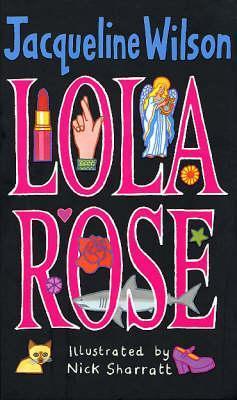
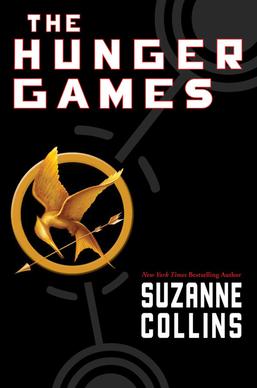
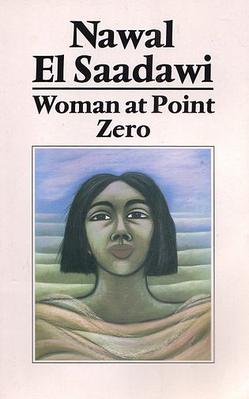
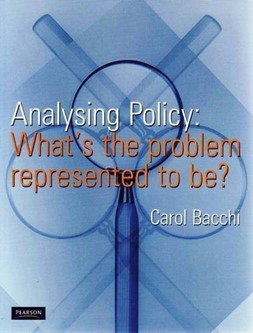
Carol Bacchi’s “What’s the Problem Represented to Be?” (WPR) framework challenges the idea that policies simply solve problems that exist out in the world. Instead, Bacchi argues that policies generate problems through the way they frame solutions, and that we are governed by these framings or ‘problematisations’. The policy itself tells us what it thinks the problem is. But what if narrative fiction could do this too? And thus, could WPR be used alongside literary analysis to a literary text?
Literary theory has long discussed the relationship between art and reality, including governance, law, social power and dynamics, and the divide between the so-called imagined and the real. Recently, the idea of storytelling and story-listening for public policy has grabbed the attention of those working within evidence-informed policy, using narrative technique to ‘contribute to and enhance the use of evidence in policymaking’, by providing different points of view that ‘prompt questions…[rather than] unexamined conclusions’ (Craig & Dillon, 2021). Literary criticism and analysis provides an insight and unpacking of political, cultural and sociological phenomena through a lens of narrative and the imaginary, and allows a sort of ethnographic insight into public consciousness and movement.
Over the past decade, WPR has been used to examine issues like gender equality, poverty, drug policy, and welfare reform. Part of my PhD research aims to take this further and ask whether we can apply WPR to fiction. Can fiction act as a policy proposal, revealing the assumptions, power dynamics, and truths that underpin how we think about social issues, specifically on particularly violence against women and girls (VAWG)?
But one of the main paradigmatic tensions has been outlined by Bacchi, namely the ways in which WPR, inspired by poststructuralism and Foucault in particular, deals with ‘discourse’ to mean knowledges or knowledge systems. However, in literary analysis (and other spaces in social science), ‘discourse’ more points towards the critical analysis of language as constructing meaning. So, there is a ‘discourse versus discourse’ tension that needs critical examination. In this case, is it possible that there can be a ‘discourse in discourse’ compromise instead? Whilst I don’t have a solid answer to this question yet, I will be exploring this through a chapter that will be published in the Palgrave Handbook for Gender and Public Policy in 2026.

 Critical Policy Conversations
Leave a comment