
Kyla Raby is a PhD candidate at the University of South Australia in Adelaide, Australia and an antislavery specialist with experience across research, education, and frontline practice. Her thesis utilises WPR to critically analyse the way in which the issue of modern slavery in global supply chains is represented as a problem within Australia’s Modern Slavery Act 2018
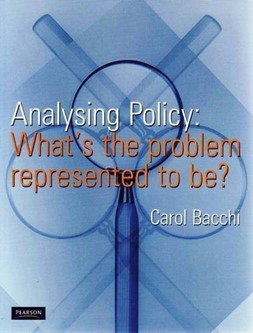
I was introduced to WPR by my supervisor in the very early stages of my research; however, it wasn’t until about 18 months into my research that I decided to use WPR as my central methodology for my thesis. I made this decision because I really liked the practical nature of its application and the way in which it enables the challenging of knowledge and power hierarchies. I also felt it allowed me to highlight the flaws in the legislation that I wanted to shed light on, and at the same time, offer alternative perspectives on how modern slavery in global supply chains could be governed.
Using WPR, I argue that the Act represents modern slavery in global supply chains as an information and non-criminal ‘market’ problem of uninformed and unethical consumer behaviour. This framing subsequently produces businesses as non-offenders, positions businesses, rather than exploited workers, as in need of regulatory intervention, and requires consumers, as opposed to businesses, to change their behaviour. It also deflects the capitalist economic system and global systems of labour and production from the problem frame, distorting the issue of modern slavery in global supply chains.
The dominance of neoliberalism as a political rationality and form of governmentality is evident in the MSA’s problem representation, which also assumes a correspondence view of knowledge. This problem representation silences the lived experience of consumers and workers. It also limits alternative or additional government action, deflects responsibility away from businesses and governments, fails to prevent the exploitation of workers and offers the potential for consumers to be deceived. Therefore, I argue that the MSA’s problem representation needs to be disrupted, replaced and alternative problem representations adopted by policy makers to truly address the exploitation of workers in global supply chains.
I have applied WPR to my study in two distinct phases, the first being to analyse the Act’s problem representation and the second to disrupt and replace it. In the disruption stages, to bring to light alternative problem representations, I engage the perspectives of groups that were silenced in their development, including people with lived experience of modern slavery and consumers.
The application of WPR in qualitative research, such as interviews and focus group discussions, could be further developed, as it has the potential to add further legitimacy to qualitative research methods. WPR has been an incredibly valuable tool for me as a researcher, as it’s allowed me to take my analysis to a much deeper level, and it has challenged me to critique my own thinking along the way.

 Critical Policy Conversations
Leave a comment