Author Details: Merissa Elizabeth Hickman is a PhD Candidate at the University of Leicester, UK. Her research focuses on how preconception health is constructed and problematised in England, critically examining the assumptions and power relations that shape these representations. Her work is supervised by Professor Nicola Mackintosh (University of Leicester) and Professor Natalie Armstrong (City St George’s, University of London).
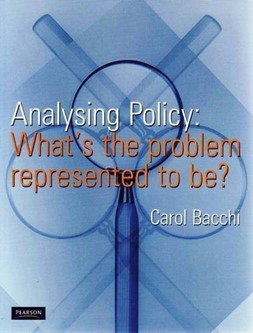
I first encountered the What’s the Problem Represented to be? (WPR) approach through Bacchi and Goodwin’s poststructural textbook while seeking more critical methods for document analysis. Previous approaches I had explored often fell short in capturing the lived effects of policy or interrogating the foundational assumptions behind problem definitions.
Having previously engaged with poststructural theory and feminist perspectives, WPR resonated strongly with me. It offered a methodological framework aligned with my theoretical commitments, while posing clear, practical questions to interrogate the power dynamics and knowledge hierarchies embedded in policy discourse. WPR encouraged a shift from asking, “How do we solve preconception health problems?” to the more fundamental, “What makes preconception health a problem, and for whom?”
I am currently applying WPR to the concept of “preconception health” by analysing ten documents, including national policies, regional guidelines, professional recommendations, and charity publications. A consistent finding is the strong emphasis on individual responsibility. Policies largely conceptualise preconception health as a matter of personal accountability, while structural issues, are acknowledged but ultimately marginalised.
Question 3 of the WPR framework, which invites genealogical analysis, has been particularly insightful. It revealed a temporal shift from broader life-course approaches to a narrower focus on clinical risk management. This shift illustrates how “scientific” knowledge is strategically mobilised to support particular problem representations. The analysis exposed how seemingly objective health guidance carries implicit assumptions about whose bodies are prioritised, whose are deemed risky, and who bears responsibility for managing this risk. These assumptions shape the contours of reproductive governance in often invisible ways.
Through this work, I have identified four distinct “bodies” produced in preconception health discourse: the Disciplined Reproductive Body, the Unfit Reproducer, the Absent Subject, and the Gatekeeper of Knowledge. An innovative aspect of my research has been the development of public and professional co-analysis workshops, designed and trialled in collaboration with Rebecca Muir (Queen Mary University of London, UK). The work is available in the Journal Critical Policy Studies, available here.
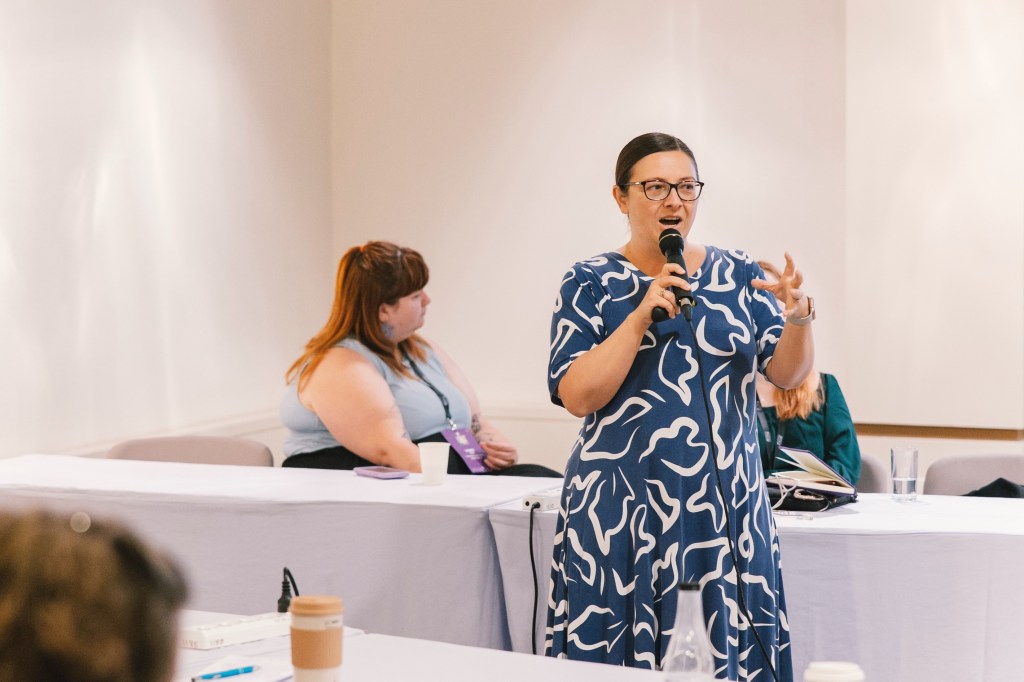
I have conducted six workshops in which participants collaboratively analyse policy documents using simplified versions of WPR’s core questions. These sessions intentionally incorporate perspectives often excluded from formal policy debates. The workshops have been valuable in surfacing diverse knowledges and exposing the assumptions embedded in ostensibly neutral health guidance- demonstrating the potential of WPR as a participatory method that challenges dominant narratives.
“The production of new knowledge is a world changing activity, repositioning other knowledges and validating new subjects, practices, policies and institutions.” – Gibson-Graham, 2017
Currently, I am grappling with the concept of lived experience, which poses challenges within poststructuralist frameworks. While poststructuralism emphasises the constructed nature of meaning, lived experience often feels more immediate, embodied, and not fully reducible to discourse. In this sense, it can exist both within and beyond policy narratives -sometimes aligning with, sometimes resisting, dominant constructions.
This tension will shape the next phase of my research, which involves poststructural interviews with policymakers. I aim to explore how they construct and negotiate meanings of preconception health, and how these meanings shape policy – while remaining attentive to how lived experience might intersect with, complicate, or push back against these constructions.
Although the foundations of WPR can sometimes feel limiting- raising difficult questions about how to advocate for change when all knowledge is understood as constructed – I see promising opportunities to integrate WPR with intersectional feminist theory and participatory approaches The co-analysis workshops show how WPR can move beyond academic critique to become a tool for collective inquiry that centres diverse ways of knowing.



 Critical Policy Conversations
Leave a comment