Kirsten AL Morris is a PhD candidate at the Veterans and Families Institute of Military Social Research, Anglia Ruskin University, UK. Kirsten is also a public health doctor, with research interests in public health, military public health, women’s health, and health inequalities. Her thesis is entitled, ‘A post-structural critical analysis of the UK Armed Forces occupational maternity scheme’.
For decades, researchers have explored the interface of gender and military institutions—but in the UK Armed Forces, the specific experiences of pregnant service women remain largely overlooked. My PhD research addresses this gap by centring their voices, capturing their lived experiences of pregnancy in the British Army through app-based diaries and interviews.
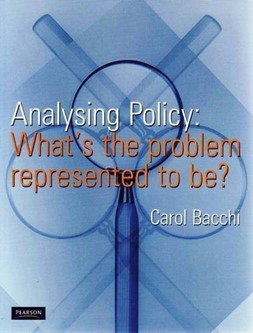
I’m a PhD candidate at Anglia Ruskin University and a serving public health doctor in the UK Armed Forces. As Carol Bacchi reminds us, “the researcher plays an active role in constructing the very reality she is attempting to investigate.” With this in mind, I approach my research not just as an academic, but as someone embedded within the institution I’m studying—navigating a dynamic space between insider and outsider, which creates valuable points of reflexive tension and insight.
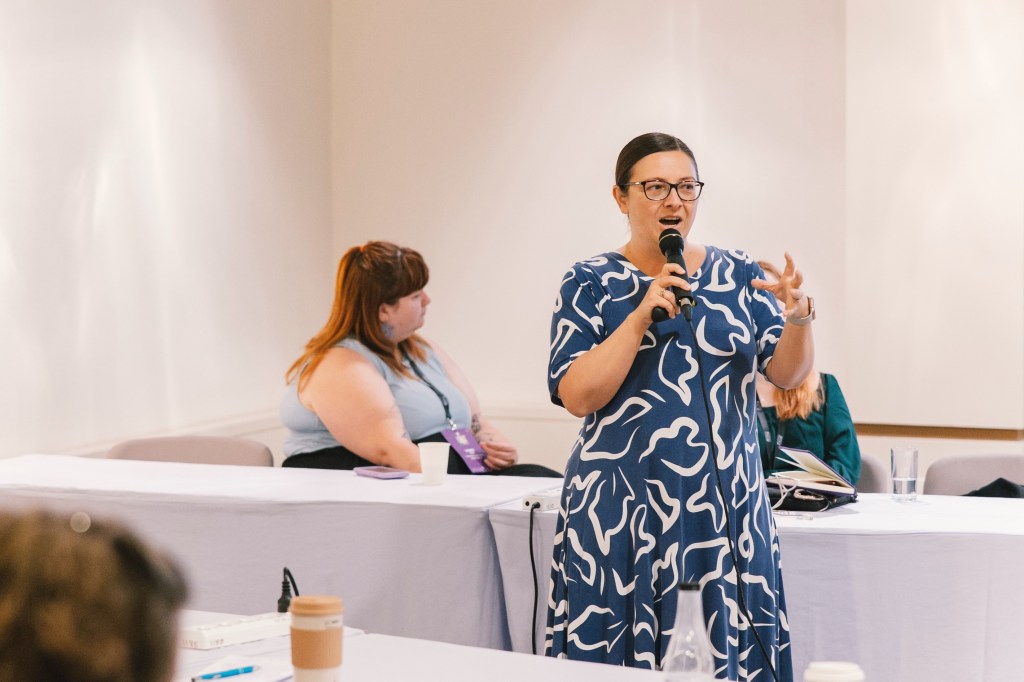
As part of the broader post-structural feminist project, the policy analysis I conducted—which I had the pleasure of presenting at ICPP7—offers critical insight into the discourses, power dynamics, and institutional mechanisms that shape how pregnancy is constructed and governed within the British Army.
My engagement with the WPR approach began as a response to the limitations I encountered in conventional policy analysis. WPR’s grounding in post-structural theory offered a means to critically interrogate how policy constructs realities, rather than simply responding to them. In this study, I applied WPR to analyse Chapter 24 of Joint Service Publication 760—the UK Armed Forces’ maternity policy, applicable across the Royal Navy, British Army, and Royal Air Force. I focused on the sections addressing pregnancy and was guided by the central question: How does the UK Armed Forces workplace maternity policy construct pregnancy as a policy problem and how do these representations shape the lived experiences of pregnant service women?
Using WPR enabled me to uncover deep-seated assumptions within military maternity policy. The analysis revealed how pregnant service women are problematised as vulnerable, deviant, and untrustworthy—positions that justify surveillance and institutional control. These representations uphold a gendered military ideal in which motherhood and soldiering are seen as incompatible, while fatherhood remains unproblematised. Application of WPR therefore allowed me to move beyond a surface-level reading of policy to interrogate how institutional language constructs the pregnant service woman as both a liability and an exception within the organisation.
One limitation of applying WPR to the maternity policy is its emphasis on discourse and representation within the text. This focus may underplay or overlook how policies are implemented, experienced or resisted in practice. As such, going forward, I will integrate the findings from the diary interview study—capturing the lived experiences of active-duty service women—with this policy analysis, to illuminate the interaction between institutional discourse and everyday realities.



 Critical Policy Conversations
Leave a comment