Ayu Siantoro is a PhD candidate at the University of Sydney, Australia. Her thesis topic is entitled, ‘Governing adolescent girls’ sexuality through anti-sexual violence activism and policy reform’. Ayu has significant experience in the public sector, and her expertise includes applied research, development program innovation, evidence-based advocacy & communications related to local governance.
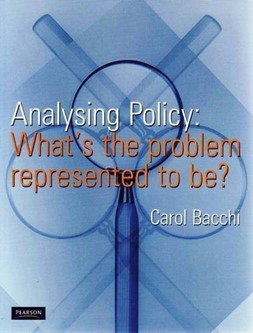
As a former social cognitive psychologist, my interest was to measure ‘how’ power, dominance, and norms are construed. Then, I had the chance to facilitate participatory research with children aimed at designing development programs and advocating policy change to tackle sexual violence against girls. Through this experience, I began to question whether the thought-to-be given social constructs I was researching (e.g., what is a girl, what is sexual violence) are not monolithic but dialectical, as they are continuously being negotiated in the context of power relations, domination-subjugation process, and normativities. Therefore, in contrast to my previous research questions about the ontology or essence of social constructs, I am now using WPR to research the contested episteme or knowledges constructing social constructs.
I am applying WPR to analyse national and local anti-sexual violence legislation, policies, and governmental documents in Indonesia, including criminal laws, national development plans, local government work plans, court rulings, and data reports. This WPR analysis is conducted to understand how knowledges in policy and governmental texts make and unmake ‘problems’ (e.g., sexual violence), ‘subjects’ (e.g., adolescent girl victims, perpetrators), and ‘objects’ (e.g., sexuality, private and public ‘places’) in plural ways. I am also employing WPR to analyse how such governing knowledges are ever-changing — emerging, gaining dominance, becoming contested, and being subjugated.

Evidence-based policy is a good policy — this statement is often taken-for-granted as a tenet in the context of policy-making. However, WPR analysis is helping me to critically examine the politics behind evidence, or data production, and to uncover that (what we consider as) the ‘truth’ is created within the specific socio-cultural and historical context. For example, official sexual violence data are often built from information about victims (e.g., case reports, surveys of women), rather than perpetrators. Based on this type of ‘evidence’, possible policies to address sexual violence tend to be oriented towards governing victims or at-risk populations (e.g., counselling, women’s empowerment), rendering perpetrators ungovernable.
During my brief engagement with WPR, I have yet to encounter any substantial gaps or future potential in the approach. However, I am currently exploring the application of WPR beyond problem representation in policy texts. Specifically, my research focuses on governing, broadly defined; which involves knowledges about what is thinkable and sayable; what people ought to do and to be, and what is possible in our social world. Therefore, I am not only applying WPR on formal policy texts, but also the constructed ‘truth’ (e.g., data) used to inform and legitimise policy ‘problems’. Moreover, I employ WPR to understand how civil society and community actors, including myself, carry out self-problematisation and self-governing (i.e., governmentality). Next, I aspire to use WPR, as a post structural tool, to expand theoretical understanding of how knowledges are governing ‘reality’.

 Critical Policy Conversations
Leave a comment